

To make Wool Thread in RuneScape: Dragonwilds, load either 1 Fleece or 3 Soft Animal Fur into a Spinning Wheel. Each recipe produces 1 Wool Thread and awards 40 Artisan XP. Fleece is the more direct material: gather it from sheep and rams in the Fractured Plains or Stormtouched Highlands, return to your Spinning Wheel, and process each Fleece into one thread.
Do not confuse the displayed 40 Artisan XP with a level requirement. The recipe information identifies 40 as the experience awarded by the conversion, not Artisan level 40.
Wool Thread Recipe at a Glance
| Input | Facility | Output | Artisan XP |
|---|---|---|---|
| 1 Fleece | Spinning Wheel | 1 Wool Thread | 40 |
| 3 Soft Animal Fur | Spinning Wheel | 1 Wool Thread | 40 |
Wool Thread is a basic item with a weight of 0.3 and a stack limit of 99. It is used directly in weapons, armour, crafting stations, clothing, and build-menu objects. It is also processed into Wool Cloth, which leads into further textile recipes.
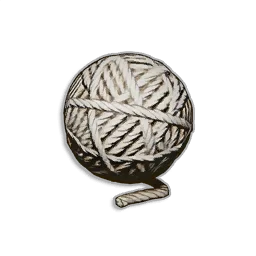
Gather the Material for Wool Thread
You have two supported processing recipes, so the best input depends on what is already in your storage and where you are currently exploring. Fleece is more efficient per individual input item, while Soft Animal Fur gives you a way to turn an existing fur stockpile into the same output.
Gather Fleece from Sheep and Rams
Sheep and rams can be found in the Fractured Plains and Stormtouched Highlands. Both regions can support a Fleece run, but the Highlands are repeatedly identified as a strong option because several sheep and rams can be encountered in the same general area.
Sheep may run away when approached, so close the distance promptly or bring a ranged option if you already use one. Rams can be more confrontational. Clear only as many animals as you can safely manage, collect the Fleece, and return it to your base rather than continuing until your inventory becomes difficult to manage.
A simple Fleece run looks like this:
- Empty enough inventory space for Fleece and the other animal materials you may collect.
- Travel to the Fractured Plains or Stormtouched Highlands.
- Look for groups containing sheep or rams rather than searching for a special Wool Thread pickup.
- Defeat the animals and collect their Fleece.
- Return to a base with a Spinning Wheel.
- Load the Fleece into the wheel and collect the completed Wool Thread.
The conversion is one-to-one, so the number of Fleece you bring home is also the number of Wool Thread you can produce. If a recipe needs 12 Wool Thread, gather 12 Fleece when using only this method.
Use Soft Animal Fur as an Alternative
Wool Thread does not require Fleece exclusively. A second Spinning Wheel recipe converts 3 Soft Animal Fur into 1 Wool Thread. This is useful when normal hunting has already left you with spare fur or when a Fleece trip would interrupt your current route.
The trade-off is the input quantity. Making 10 Wool Thread requires either 10 Fleece or 30 Soft Animal Fur. Check your storage before leaving for another gathering run; an overlooked fur stack may already cover a small weapon or armour recipe.
Avoid mixing the ratios. One Fleece makes one thread, but one Soft Animal Fur does not. The fur recipe requires all three pieces for each thread.
Treat Chest Loot as a Backup
Dowdun Reach chests can contain 2–4 Wool Thread, with listed rarities of 1/17 and 1/100 for different chest entries. These are supplementary supplies. If your project needs an exact quantity, use the Spinning Wheel rather than relying on random loot.
Process the Material at a Spinning Wheel
The Spinning Wheel is the required facility for both Wool Thread recipes. A Loom is used later for Wool Cloth; placing raw Fleece into a Loom skips the required first stage and will not follow the supported production chain.
- Bring Fleece, Soft Animal Fur, or both to a Spinning Wheel.
- Choose the input that matches the recipe you intend to use.
- Load 1 Fleece per thread or 3 Soft Animal Fur per thread.
- Start the station and allow it to produce Wool Thread.
- Collect the output before loading or planning the next stage.
- Move finished thread into storage, a Loom, or the facility required by your target recipe.
For a mixed batch, calculate each input separately. For example, 8 Fleece can provide 8 thread, while 12 Soft Animal Fur can provide another 4. Together, those materials produce 12 Wool Thread.
If you are preparing a large order, multiple Spinning Wheels can process separate batches in parallel. This changes how many batches can be active at once, but it does not change either recipe ratio. Build the batch around the amount of thread you actually need rather than converting every textile material in storage without a target.
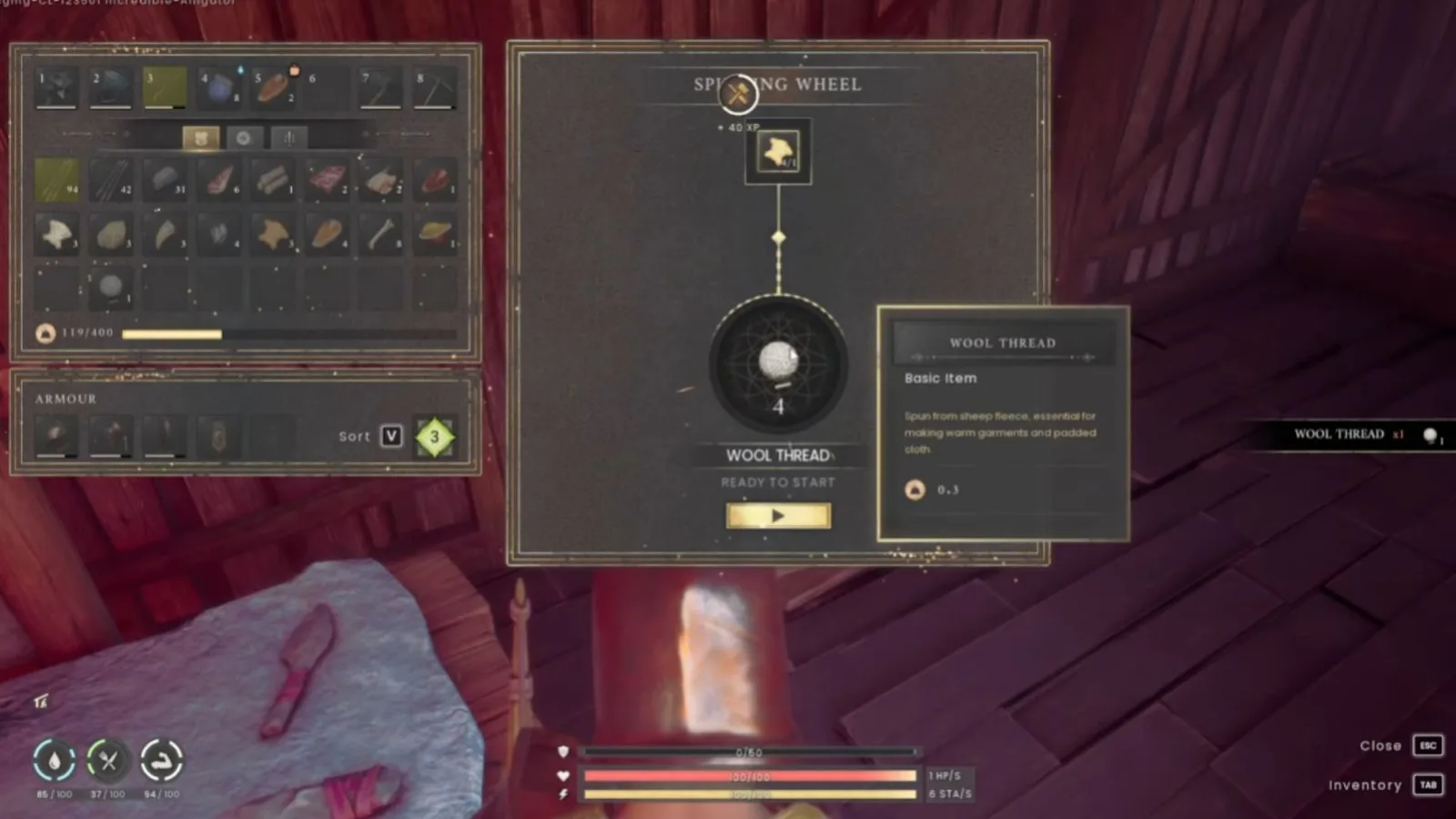
The Spinning Wheel interface shows Fleece being processed into Wool Thread.
Turn Wool Thread into Wool Cloth
Wool Cloth is the main processed material made from Wool Thread. Place 3 Wool Thread in a Loom to produce 1 Wool Cloth and gain 40 Artisan XP.
| Input | Facility | Output | Artisan XP |
|---|---|---|---|
| 3 Wool Thread | Loom | 1 Wool Cloth | 40 |
Plan with the 3:1 ratio so that a gathering trip does not leave you one thread short.
This means the full Fleece-to-cloth chain is:
- Gather 3 Fleece.
- Process the 3 Fleece at a Spinning Wheel.
- Collect 3 Wool Thread.
- Process the 3 Wool Thread at a Loom.
- Collect 1 Wool Cloth.
If you use only Soft Animal Fur, one Wool Cloth requires 9 fur because each of its three threads costs three fur. Padded Cloth combines Wool Cloth with Rough Cloth. Reserve three Wool Thread for every Wool Cloth your larger project requires, alongside any thread needed directly by the final recipe.
Direct Uses for Wool Thread
Before converting an entire stack into Wool Cloth, check whether your target recipe consumes Wool Thread directly. Many weapons, armour pieces, and facilities need raw thread, and converted cloth cannot replace it.
Stations, Tools, and Build-Menu Objects
| Product | Facility | Wool Thread required | Other listed materials |
|---|---|---|---|
| Loom | Build Menu | 6 | 22 Ash Plank, 4 Bronze Bar |
| Loom Harness | Build Menu | 12 | 18 Ash Plank, 12 Oak Logs, 4 Iron Bar, 4 Ram Horn |
| Tackle Box | Build Menu | 1 | 5 Oak Logs, 1 Iron Bar |
| Textile Kit | Build Menu | 1 | 1 Coarse Thread, 1 Rough Cloth, 1 Wool Cloth, 1 Padded Cloth |
| Ball of Wool Thread | Build Menu | 1 | None listed |
| Wool Thread Pile | Build Menu | 5 | None listed |
| Wool Thread Bin | Build Menu | 20 | 4 Ash Logs |
| Wool Net | Crafting Table | 2 | None listed |
A Loom and Loom Harness together consume 18 Wool Thread. If you are starting with no thread, that is 18 Fleece or 54 Soft Animal Fur. Keep this construction cost separate from any thread you also need to feed into the completed Loom.
Representative Equipment Uses
Wool Thread can be needed directly even when a recipe also uses other textile materials. These examples show the raw-thread cost; check your target equipment's full recipe before gathering.
| Product | Facility | Wool Thread required |
|---|---|---|
| Bronze Crossbow | Fletching Bench | 6 |
| Oak Longbow | Fletching Bench | 6 |
| Oak Battlestaff | Mystic Forge | 3 |
| Bronze Greatsword | Blacksmith's Bench | 2 |
| Iron Logging Axe | Blacksmith's Bench | 2 |
| Bronze Platebody | Armour Bench | 2 |
| Hard Leather Body | Armour Bench | 4 |
| Wizard Robes | Armour Bench | 6 |
Keep thread reserved for equipment in its raw form. Turning it into Wool Cloth commits three thread per cloth, and cloth cannot substitute for a recipe's direct thread requirement. Add the raw-thread demand to the cloth-production demand before starting your gathering run.
Calculate a Batch Before Gathering
Start with the final product and work backward through only the textile conversions it actually uses. This prevents two common shortages: converting thread that was needed raw, and gathering enough thread for a station but none for the items that station will produce.
Use these planning rules:
- Direct Wool Thread requirement: gather the same number of Fleece, or three times as much Soft Animal Fur.
- Wool Cloth requirement: multiply the cloth count by three to find the thread requirement.
- Fleece for Wool Cloth: three Fleece per cloth.
- Soft Animal Fur for Wool Cloth: nine fur per cloth.
- Mixed inputs: calculate the thread produced by each material separately, then add the results.
For example, suppose you want a Loom, an Oak Longbow, and 4 Wool Cloth. The Loom needs 6 thread, the longbow needs 6, and four cloth need 12. Your total is 24 Wool Thread, requiring 24 Fleece, 72 Soft Animal Fur, or a mixture that produces 24 thread.
Add a small reserve only when you expect another known recipe. Wool Thread stacks to 99, but it still carries weight, and processing an arbitrary surplus can make later inventory management less convenient. A written target is more useful than filling every station simply because material is available.
Common Production Mistakes
- Treating Artisan 40 as a level requirement: it is the experience value attached to the recipe.
- Putting Fleece into a Loom: Fleece must first become Wool Thread in a Spinning Wheel.
- Underestimating Wool Cloth: one cloth requires 3 Wool Thread.
- Assuming sheep are the only route: 3 Soft Animal Fur can also produce 1 Wool Thread.
- Using the Fleece ratio for fur: fur requires three pieces per thread, not one.
- Converting every thread into cloth: many weapons, armour pieces, stations, and build objects consume Wool Thread directly.
- Forgetting station construction costs: the Loom consumes 6 thread and the Loom Harness consumes 12 before either facility contributes to later textile crafting.
- Relying on random chest supplies for an exact project: Dowdun Reach chests can supplement your stock, but Fleece conversion provides predictable quantities.
See armour set material requirements for the requirements and steps of that next task.