
Craft Mystic Cloth at a Loom using 3 Mystic Thread for each finished cloth. The thread is made at a Spinning Wheel from four Mystic Fibres, so producing one cloth from raw fibres requires 12 Mystic Fibres across the two stations. Each cloth operation awards 40 Artisan experience.
Mystic Cloth is used in Mystic and Zamorak clothing, Mithril and Black Knight armour, and selected weapon and upgrade recipes. Decide on the final item first: the Mystic robe body needs 12 cloth, while a Mithril helmet needs one. Both use the same material, but the size of the necessary production run is very different.
Separate Fibres, Thread, and Cloth
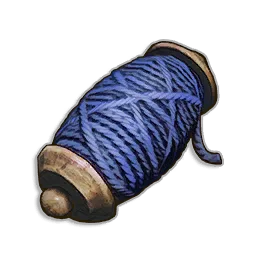
The material chain has three distinct inventory items. Mystic Fibres are the raw input, Mystic Thread is the Spinning Wheel output, and Mystic Cloth is the Loom output. A final recipe asking for cloth cannot be completed by keeping an equivalent amount of unprocessed thread or fibres.

| Production stage | Facility | Input | Output | Artisan XP |
|---|---|---|---|---|
| Spin the thread | Spinning Wheel | 4 Mystic Fibres | 1 Mystic Thread | 40 |
| Weave the cloth | Loom | 3 Mystic Thread | 1 Mystic Cloth | 40 |
The listed 40 values are experience awards, not confirmed level requirements. Use the station's recipe availability to identify a missing unlock rather than reading the XP amount as Artisan level 40.
Mystic Cloth weighs 0.6 per item and stacks to 50. The same weight and stack limit are also listed for Mystic Thread and Mystic Fibres, but matching inventory properties do not make the items interchangeable. Identify the name and production stage before moving supplies to the Armour Bench.
For one cloth made entirely from fibres, you perform three thread operations followed by one cloth operation. That consumes twelve fibres and awards 160 Artisan XP across those operations. The calculation describes material and XP totals; it does not establish production time or a level gate.
Make the Required Cloth at the Loom
The Loom and Spinning Wheel each require a roof above them to function. Mystic Cloth is one of the ordinary Loom recipes; it does not need the Loom Harness required for Fine, Desert, and Infinity Cloth. Check shelter and the exact output before treating an inactive station as an ingredient shortage.
Count your existing finished cloth before starting a new batch. Then count thread already available, because it reduces the fibre portion of the remaining work. Keeping those two inventories separate prevents you from gathering raw fibres for a thread supply you already possess.
- Read the final item's Mystic Cloth cost.
- Subtract finished cloth already reserved for that item.
- Multiply the remaining cloth target by three to obtain its thread requirement.
- Use any Mystic Thread already available before calculating new fibre needs.
- Spin the missing thread at the Spinning Wheel using four fibres per thread.
- Weave complete three-thread groups at the Loom.
- Collect the cloth and carry it to the facility for the final recipe.
If you need four cloth and already have six thread, you still need another six thread. Those six require 24 fibres, after which all twelve thread can be converted into four cloth. Calculating the entire four-cloth target as 48 new fibres would ignore the thread already in storage.
If you have eight thread and no cloth, you can make two cloth and retain two thread. The remaining two do not produce a third cloth until another thread is added. This is why looking only at a seemingly large spool count can lead to a one-cloth shortage at the Armour Bench.
Match the Batch to Your Equipment Goal
| Finished cloth target | Thread required | Fibres required if starting from none |
|---|---|---|
| 1 | 3 | 12 |
| 2 | 6 | 24 |
| 4 | 12 | 48 |
| 8 | 24 | 96 |
| 10 | 30 | 120 |
| 12 | 36 | 144 |
| 24 | 72 | 288 |
These are full-production totals. Finished thread, finished cloth, and cloth obtained while looting reduce the new production requirement. Subtract them at the correct stage rather than subtracting a fibre count directly from a cloth target.
A full fifty-thread stack makes sixteen cloth and leaves two thread. For a twenty-four-cloth Mystic set, that stack still leaves eight cloth to produce, requiring another twenty-four thread before the Loom stage is finished.
The material's 50-item stack limit does not require you to craft an entire stack. A one-cloth Mithril helmet project and a 24-cloth Mystic set project are both valid targets. Choose the amount that closes your actual deficit rather than making a large batch solely to fill a storage slot.
Reserve Cloth for Mystic and Zamorak Clothing
Both clothing groups use the Armour Bench, but their cloth and supporting-material costs differ. The Mystic set uses Cursed Leather, while the Zamorak pieces use Black Metal Bars alongside the shared Infernal Fragments and Demonic Oil.

| Piece | Mystic Cloth | Cursed Leather | Black Metal Bar | Infernal Fragment | Demonic Oil |
|---|---|---|---|---|---|
| Mystic Hat | 4 | 1 | Not listed | 12 | 1 |
| Mystic Robe Legs | 8 | 2 | Not listed | 24 | 2 |
| Mystic Robes | 12 | 4 | Not listed | 32 | 3 |
| Zamorak Hood | 2 | Not listed | 2 | 12 | 1 |
| Zamorak Robe Legs | 6 | Not listed | 4 | 24 | 2 |
| Zamorak Robes | 8 | Not listed | 6 | 32 | 3 |
All three Mystic pieces require 24 cloth, seven Cursed Leather, 68 Infernal Fragments, and six Demonic Oil. If you make the cloth entirely from fibres, its portion requires 72 thread and 288 fibres. The fragments, oil, and leather are still separate ingredients; producing the 24 cloth does not cover them.
All three Zamorak pieces require 16 cloth, twelve Black Metal Bars, 68 Infernal Fragments, and six Demonic Oil. The cloth portion is 48 thread and 192 fibres when starting from raw materials. Do not reuse the Mystic set's 24-cloth target merely because both groups are magic clothing.
For a smaller project, work from one row. A Mystic Hat requires four cloth, or twelve thread and 48 fibres, plus its leather, fragments, and oil. A Zamorak Hood needs two cloth, or six thread and 24 fibres, plus two Black Metal Bars, twelve fragments, and one oil.
Check the Cloth Costs of Metal Armour
Mystic Cloth is not exclusive to magic clothing. It appears in Mithril and Black Knight armour recipes alongside their metal, leather, and oil inputs. The quantity depends on the piece.
| Armour piece | Mystic Cloth | Metal ingredients | Cursed Leather | Demonic Oil |
|---|---|---|---|---|
| Mithril Helmet | 1 | 4 Mithril Bars | 4 | 1 |
| Mithril Med Helm | 1 | 4 Mithril Bars | 4 | 1 |
| Mithril Platebody | 4 | 10 Mithril Bars | 6 | 3 |
| Mithril Platelegs | 2 | 6 Mithril Bars | 4 | 2 |
| Black Knight Helmet | 1 | 4 Black Metal Bars and 2 Mithril Bars | 4 | 1 |
| Black Knight Platebody | 4 | 10 Black Metal Bars and 2 Mithril Bars | 6 | 3 |
| Black Knight Platelegs | 2 | 6 Black Metal Bars and 2 Mithril Bars | 4 | 2 |
One helmet, body, and legs combination uses seven cloth in either group. For Mithril, choose either the helmet or med helm rather than adding both to the same three-piece plan. The seven-cloth portion requires 21 thread and 84 fibres if no processed materials are already available.
The shared cloth total does not mean the metal requirements are shared. A Black Knight Platebody asks for Black Metal Bars and Mithril Bars, while the Mithril Platebody uses Mithril Bars. Keep the exact named metals in the supply list instead of planning from the cloth row alone.
Protect Cloth Reserved for Weapons and Upgrades
An Ascension Core recipe uses ten Mystic Cloth at the Mystic Forge alongside 99 Ascension Shards for power level 6, ten Mithril Bars, and ten Cursed Leather. Its cloth portion therefore represents thirty thread or 120 fibres if starting without processed stock.
Reserve that ten-cloth amount before using the same supply on clothing. For example, an Ascension Core plus a Mystic Hat needs fourteen cloth in total. Making ten cloth for the core and then spending four on the hat leaves the upgrade project four short, despite having completed the original Loom target.
The Mithril Scimitar uses one Mystic Cloth at the Blacksmith's Bench with ten Mithril Bars, five Cursed Leather, and sixteen Infernal Fragments. Titan's Wrath uses four cloth at the Blacksmith's Bench, along with twelve Black Metal Bars, five Blue Dragon Leather, 64 Infernal Fragments, and one Broken Titan's Wrath.
Those are selected uses of the material rather than a recommendation to craft every item. The important planning step is to identify whether your chosen weapon or upgrade consumes cloth or thread. Different recipes in the same equipment tier can use different stages of the textile chain.
Use Loot as a Supplement to Production
Mystic Cloth can appear in Textile Salvage as one cloth and in Umbral Sands chest loot as one cloth. Mystic Thread also appears in salvage and chest loot, while Mystic Fibres can be obtained from Zamorakian Mage Packs and Textile Salvage.
A Zamorakian Mage Pack supplies one to two fibres. Textile Salvage lists three to four fibres as one possible outcome. The pack is a raw-input route; the salvage and chest entries can contribute at different stages of the chain. Inspect what you actually received before recalculating the remaining batch.
Do not assume that finding a salvage container guarantees cloth, thread, and fibres together. The listed outcomes are different items. A thread pickup saves Spinning Wheel work, while a cloth pickup saves both the thread production and the Loom conversion for that piece.
Diagnose the Missing Production Stage
The Armour Bench asks for cloth while your storage contains thread. Convert complete three-thread groups at the Loom. The number of spools does not satisfy a cloth requirement until that conversion is complete.
The Loom cannot finish the target. Count thread in groups of three. Leftover one or two thread are useful inventory, but they cannot make another cloth without completing the next group.
The cloth is ready but the item is still incomplete. Review its other named ingredients and the correct facility. Armour, a weapon, and an Ascension Core use different final recipes even when they consume the same cloth.
Raw-input calculations keep growing. Recount finished stock first. Looted cloth and existing thread reduce different stages of the production chain, and treating all inventory as raw fibres can cause unnecessary gathering.